
When games aren’t playful any more, play can mean breaking — and changing — the rules. This is a reprint of a piece I wrote for Sociological Review Magazine in March 2025.
Play is at the heart of many aspects of children’s learning: physical play for motor skills; social play for relationships; and dress-up and make-believe for playing out ideas about how the world works and how we fit into it. And I don’t believe we ever stop. Whether in playgrounds, lecture halls, factory floors or app-mediated interactions, we are constantly trying to get the rules straight.
As toddlers, my brother and I used to play something we called dupten — a toddler’s way of saying “just pretend”. As in, “Dupten we’re in a spaceship!” We would speculate on all the things we’d discovered in books and drawings and shows, and we’d play at imagining the world with these strange beasts and machines in it.
Dupten allowed us to sketch out a world we didn’t yet know.

A few years later, in the schoolyard, my friends and I took make-believe far more seriously. We created and negotiated elaborate scenarios involving royal families, heroes, villains and political intrigue. Our characters had names, relationships, motivations. By now more familiar with the conventions of such societal structures, we were far stricter about the limits of what was permitted. I once adjudicated a debate between three girls who all wanted to be named Bluebell for the afternoon. We understood that they couldn’t all be Bluebell at once — that was against the rules.
As we get older, our play becomes more sophisticated and crystalises around rules and structures. Physical play becomes sport, with its curated pitches and fields, dedicated equipment and scoring conventions. Play with blocks gives way to board games, in which each piece has legal and illegal ways to move.
The rules of the game make winning harder than it would have been without them – so to evolve, bend or break the rules is to spoil the game.
Such games allow very little negotiation, constructed as they are from detailed instructions, conditions and rules. Learning the rules of a game is powerfully instructive and enables us to navigate all manner of situations with assurance. It’s not for nothing that we use games as a metaphor for so many aspects of adult life: the dating game, political power plays, expectations of sportsmanship. Game logic is an essential architecture for navigating social life.
Although we participate in many games as adults, we are seldom playful – yet playfulness might be exactly what we need to challenge the rules of the situations we find ourselves in.
I am an academic-in-training, doing my PhD and learning from supervisors who talk explicitly about academia as a game. As I continue to learn its many tacit rules, I see much that deserves to be challenged. I’m determined to stay playful.
From playfulness to gamefulness
Many anthropologists view play not as an activity, but as a disposition: playfulness. Being playful, in this view, involves the readiness to improvise, to imagine otherwise, to explore the possibilities of something beyond our existing maps, or to set aside those maps. Players must agree to share in imagining, and so the rules of play evolve as they are negotiated.
A child decides that the doll she is holding can now fly. Her mother, sitting with her, agrees that yes, the doll is flying, and look, there’s a teddy flying towards it!
But according to philosopher Bernard Suits’ classic book, The Grasshopper: Games, Life and Utopia, a game involves an attempt to win by following the given rules. The rules of the game make winning harder than it would have been without them — so to evolve, bend or break the rules is to spoil the game.
A chess player can’t take flight with his rook, or he has spoilt the game. The rules are pre-determined. They can be used strategically but never broken. Many games involve an element of chance — but even chance can be managed through calculating probabilities. It can be “gamed”.
Labour games in the precarious economy
Although adults play far fewer explicit games than children, it’s not true to say that we do not game. We participate in many games every day, governed by sets of special rules. Sometimes the rules are posted at the door (“no shirt, no shoes, no service”). Sometimes they are unwritten or even unspoken, but there are always consequences for breaking them, some of which can seriously impact on our lives outside the game.
This is starkest in the context of workplace games.
Marxist sociologist Michael Burawoy suggested that labour itself could be seen as a game. In his Manufacturing Consent, he described how machinists in the factory where he worked participated in the game of “making out”, which involved optimising the ratio between their work efforts and their rates of pay.
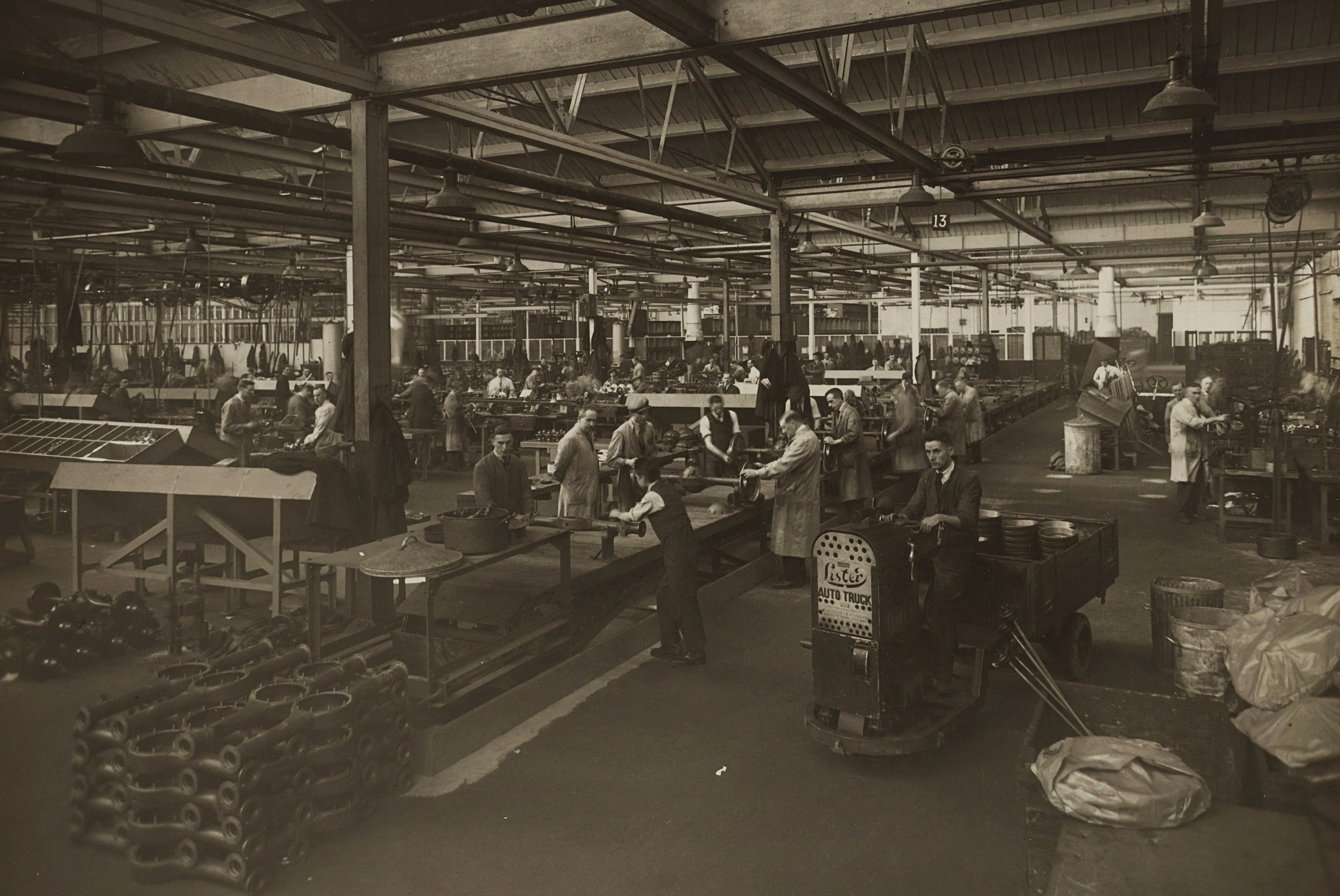
In this scenario, workers were paid by the piece rather than by the hour, so making more pieces meant making more money. However, the daily quota could only be exceeded by so much without causing the foreman to increase it, thus reducing the daily payout for everyone. To “make out”, a worker needed to find the productivity sweet spot, above quota without giving the game away.
Burawoy’s co-workers were gaming the system – but in doing so, they were consenting to it and perpetuating it.
“Making out” has been observed in contemporary work arrangements too, including gig-economy work such as Uber driving and service industry jobs. This type of workplace game emerges not from management strategy but from workforce culture, and can be highly motivating, even meaningful, for workers who know the rules: for example, how to manage the metrics from ride-hailing apps or how to calculate the likely tipping behaviour of a hospitality customer.
Studies tend to focus on workplace games with rules that are known and explicitly communicated between workers. But many workplace games are played on mute. It can take years to learn the rules by observation, unless we manage to find a colleague willing to take us aside and explain.
In academia, a large part of the game is about maximising overt metrics, such as the citation count on your published papers. There are levels to ascend — literally. In Australia, where I study, academic rankings are measured by levels, with senior lecturers at Level C, associate professors at Level D, and so on.
But between these clear, quantifiable lines are nuanced rules about political engagement within the academic sphere; acceptable conventions that I’ve found quite shocking as someone with a couple of decades of non-academic work experience behind me.
The rules about where, how and who can talk about research can be enforced by social territorialism and sabotage.
Playing the fool and changing the game
There is a precious social role for the adult who maintains a playful disposition: the fool. This role manifests across cultures in different ways, from the medieval court jester to the stand-up comedian. Fools invite us to question or even set aside the rules we are following, and even laugh at ourselves for having taken them so seriously.

Circus artist Rebecca Plume shows us how clowns make light of the conventions and boundaries of the games we all play. In their garish motley clothes and oversized shoes, they disregard the standards both of conventional dress and of the circus itself, where the other performers wear beautiful, sleek and sparkling acrobatic costumes.
Similarly, some academics are beginning to tease the boundaries of what academic conversations can look like. In Melbourne, for example, Professor Phillip Dawson coordinates the Peer Revue shows, in which established researchers use improv comedy to explore the funny side of their work.
Fools are not merely funny. They can also be sad, absurd and confronting. Clowns frighten us with their warped features and unpredictable behaviour. Comedians speak publicly and painfully about the absurdity of modern life. Characters such as Jack Nicholson’s mental patient Randle McMurphy in One Flew Over the Cuckoo’s Nest, who resist institutional structures and joyfully substitute their own, are punished even as they sow the seeds of systems change for others around them.
Being playful in a game world is hard. It requires us to acknowledge and embrace the absurd, and to keep embracing it. It means paying attention to the limits and imagining different ones. It means inviting others into an imaginary world that challenges the one they know.
And perhaps it requires us to be unserious — despite the seriousness of the issues at stake.
Challenging the rules, however playfully, can be genuinely dangerous, and not everyone can afford to do it — but sometimes it’s the only way to change them.
 The Mind File
Leave a comment